
How Do Porta Potties Work?
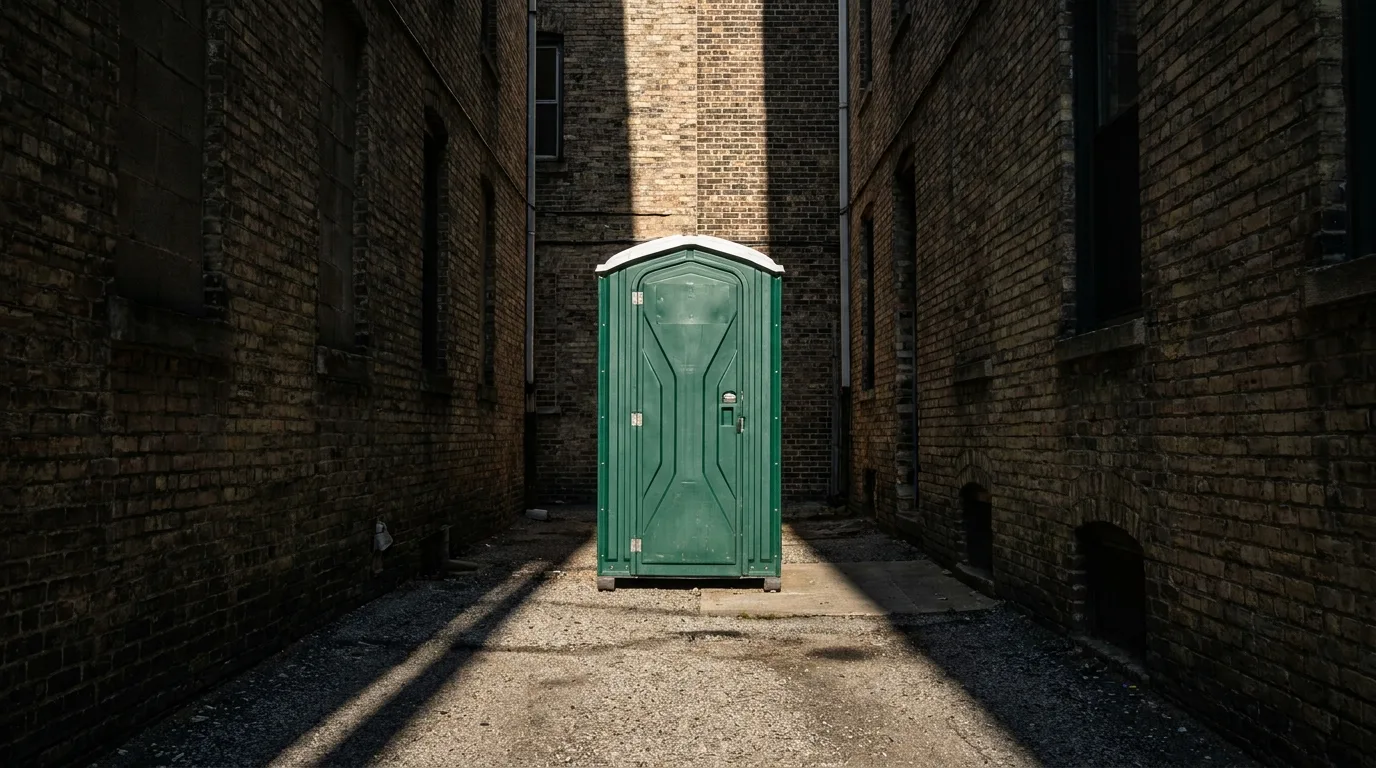
The basic unit is simple. You sit down, do your business, and everything drops into the tank below, not into pipes or a septic line. A standard unit measures about 44 by 48 inches on the ground and stands roughly 92 inches tall, so it fits in tight spots on a job site or backyard. The blue liquid in the tank isn't just for smell. It's a chemical treatment that digests waste and keeps things from backing up between services. If you're wondering how do porta potties work when there's no flush handle: there isn't one on a standard porta potty rental. Waste just falls straight down. That's why a construction worker running to a porta potty on a hot afternoon in Moreno Valley doesn't have to worry about a jammed toilet. There's nothing mechanical to jam. Service crews follow ANSI/PSAI Z4.3, the industry standard that sets a baseline of one service visit per week for units seeing regular use over a 40 hour week. Busier sites get serviced more often. For anyone renting for the first time, our porta potty rental checklist walks through what to expect on delivery day.
How Do Flushable Porta Potties Work?
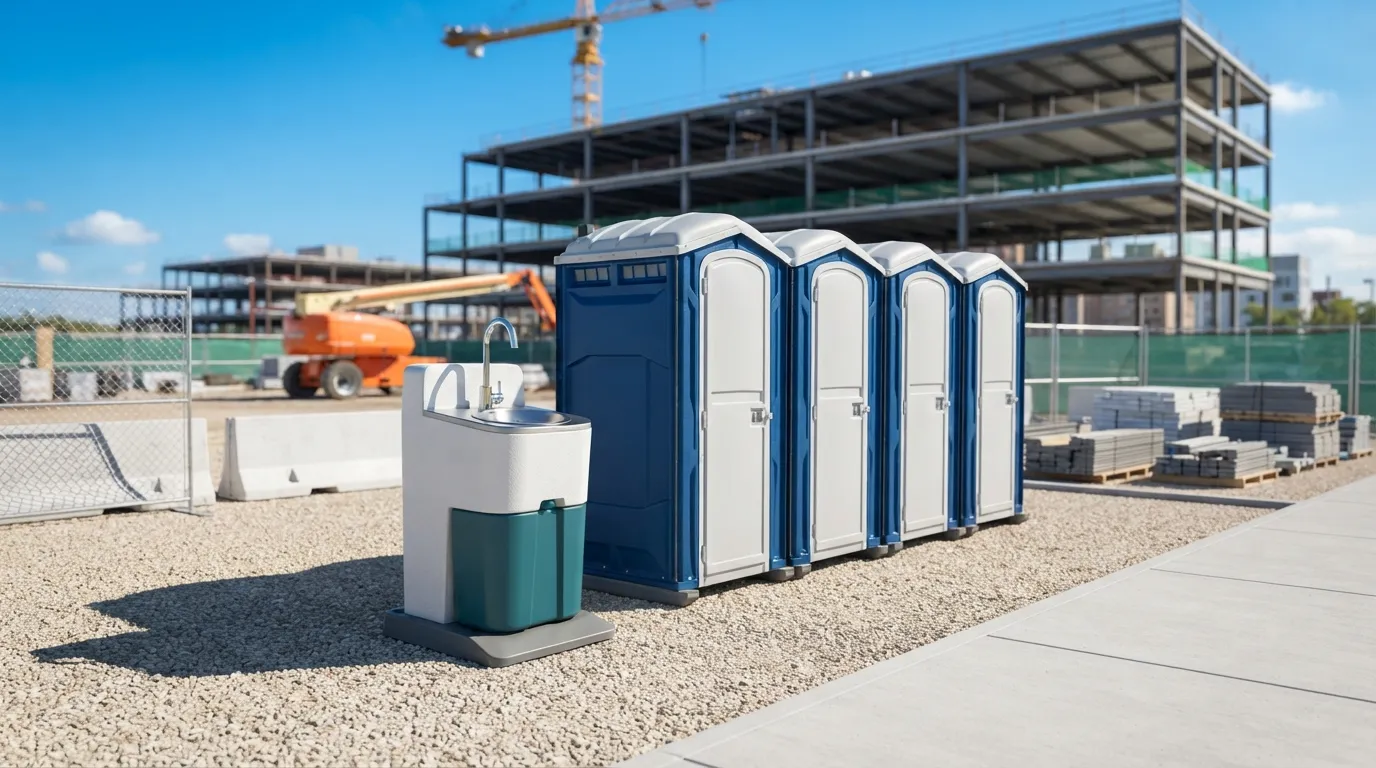
A flushable unit, often called a deluxe flushable porta potty, uses a small onboard freshwater tank and a foot pump or hand pump to push a rinse of water into the bowl after each use. It still drains into the same kind of holding tank below, it just clears the bowl visually the way a home toilet does. These units usually include a sink too, which brings up how does a portable sink work: a portable sink runs on the same principle, a built-in freshwater reservoir feeds the tap, and gray water drains into a separate tank underneath rather than going anywhere near the ground. That setup matters for handwashing compliance. Under 29 CFR 1910.141(d)2, washing facilities need soap and a towel or hand-drying device, and sanitizer doesn't count as a substitute. Sites running larger crews sometimes pair a flushable unit with a standalone handwashing station rental or a portable sink rental to keep that requirement covered. For weddings and backyard parties in Moreno Valley, the flushable option is the one most hosts pick, and you can see it staged for that use on our wedding restroom rental page.
Do Porta Potties Need a Septic Tank or Sewer Line?
No. That's the whole point of a porta potty: it's self-contained and needs no plumbing hookup at all. This makes them the go-to for construction site services in Moreno Valley, where there's often no working sewer line yet, and for remote spots like farmland covered on our farm and agricultural restrooms page. Compare that to a home septic system, which is a buried tank, typically pumped every 3 to 5 years depending on tank size and household size. A porta potty tank fills much faster because it's smaller and sees heavier short-term use, so it gets pumped weekly instead of every few years. Some customers ask about septic tank cleaning chemicals for their home system and try to use the same product in a rental unit. Don't. The chemical loads are different, and our crews use products matched to portable tanks specifically. If your home tank needs attention instead of a rental unit, that's a different service entirely, covered on our septic pumping service and septic tank cleaning pages, with signs to watch for on septic tank warning signs.
How Do Camping Porta Potties Work?
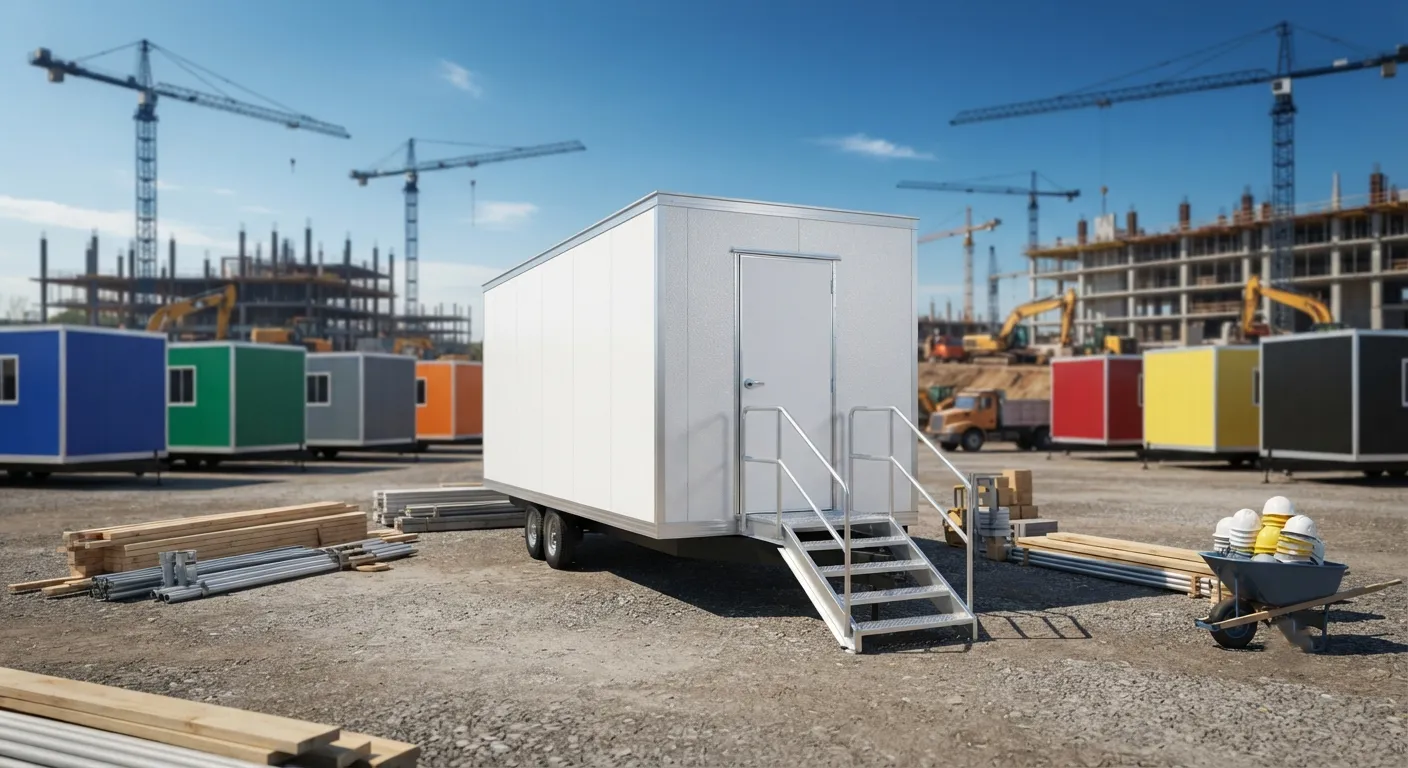
Camping units work the same way as job-site units, just smaller and sometimes designed to be moved by hand rather than delivered by truck. They still use a sealed tank and a chemical treatment, they just hold less volume, so they need more frequent dumping if a group is using one hard over a weekend. For anyone planning a trip near March ARB, 7.4 miles southwest of Moreno Valley, or camping further out, our camping porta potty page covers unit sizing for small groups. On job sites, OSHA 1926.51(c) sets the real benchmark: one toilet for 20 workers or fewer, scaling up from there as crew size grows. That's separate from field work covered under OSHA 1928.110, which sets similar sanitation requirements for agricultural hand-labor crews. If you're not sure how many units your crew needs, our how many porta potties do I need guide breaks down the math, and the full OSHA framework is on OSHA portable toilet requirements. Delivery trucks generally need about 60 feet of straight clearance behind them to place a unit or swap a tank, something worth mentioning if your Moreno Valley site has a tight driveway or alley access.
Why does a porta potty smell less on some sites than others?
Smell comes down to service frequency and the chemical treatment, not the unit itself. A unit serviced weekly per the ANSI/PSAI Z4.3 baseline stays far fresher than one skipped a cycle. See do porta potties smell for more detail.
What chemical goes in a porta potty tank?
A blue deodorizing and waste-digesting fluid, different from what you'd use in a home septic tank. It breaks down solids and masks odor between service visits, which typically happen weekly.
Can I rent a flushable unit for a backyard wedding?
Yes. A deluxe flushable porta potty includes a water rinse and sink, better suited to guests than a standard unit. Check wedding restroom rental for options sized to guest count.
How often does a job-site porta potty get pumped?
Weekly is the standard baseline under ANSI/PSAI Z4.3 for units seeing regular five-day use. High-traffic sites often need two visits a week to keep pace.
Do portable sinks need soap and towels, not just sanitizer?
Yes. 29 CFR 1910.141(d)(2) requires soap and towels or a hand-drying device at washing facilities. Hand sanitizer alone does not meet that standard.
Next step
Get a delivery date
Tell us the address, the dates and the headcount. We size the order and confirm the route.