How many restrooms does a county fair need?
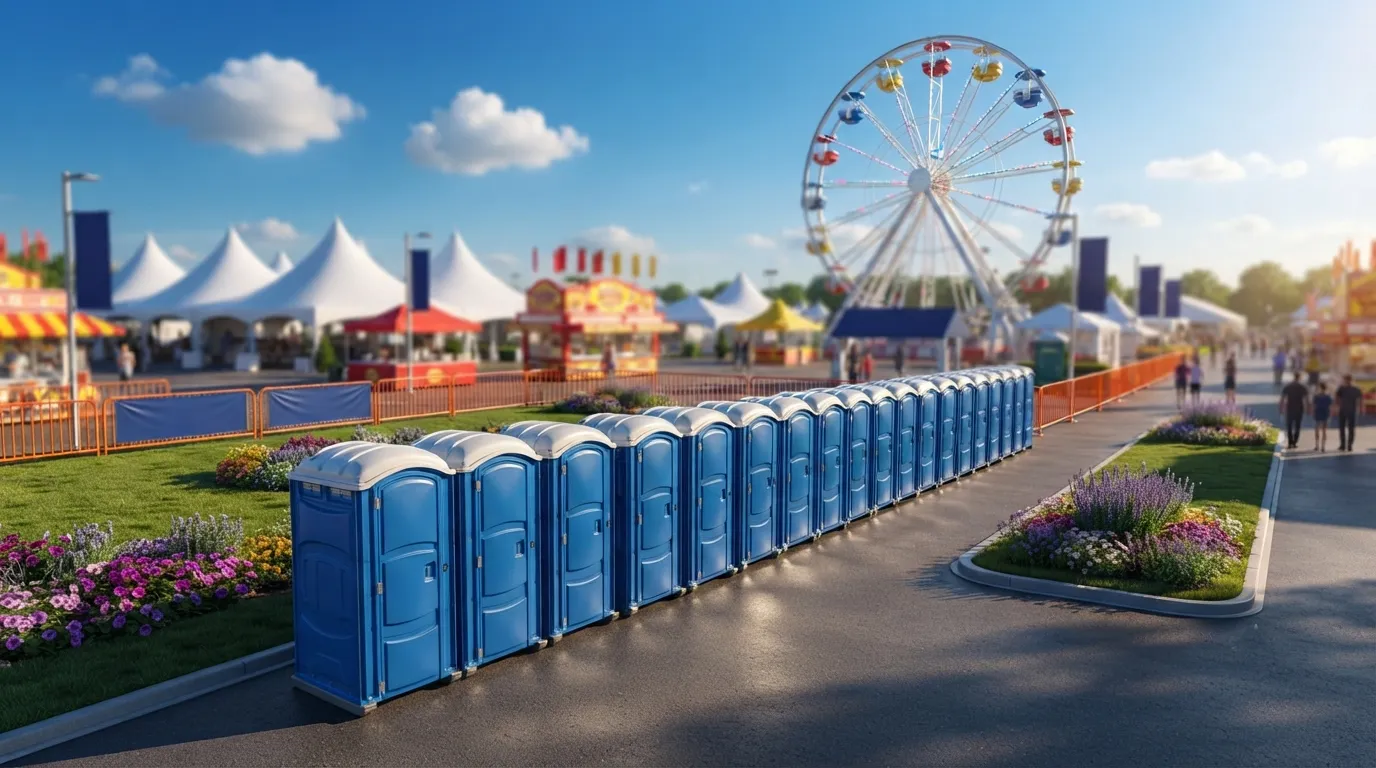
Fair attendance swings hard between a Tuesday afternoon and a Saturday night, so unit counts have to flex with the schedule, not sit fixed for the whole run. OSHA 1926.51(c) sets the baseline most planners still use as a starting ratio: one toilet for every 20 people at a work site, scaling up from there. Fairs aren't construction sites, but the ratio gives a workable floor, and our porta potties do i need guide walks through the math for gate-count events. A fair with food vendors, a midway and a grandstand usually needs restrooms clustered at each zone, not one bank near the entrance. ADA Standards section 213.2 requires that at least 5 percent of any clustered group be accessible, never fewer than one, so a bank of twenty standard units needs at least one ADA accessible porta potty in the mix. We place standard porta potty rental units near the midway and food court, and route deluxe flushable porta potty units toward VIP areas or sponsor tents. For an event running multiple days, a restroom trailer rental can cover the grandstand crowd without the line buildup single units get during intermission. Moreno Valley fairground layouts vary lot to lot, so we walk the site with the organizer before quoting count and placement, same as we do for any event restroom rental booking.
What does it cost to rent restrooms for a fair?
Pricing depends on unit type, how many days the fair runs and whether you need trailers with sinks and lighting. A standard unit rented for an event-length run falls between 200 and 800 dollars depending on duration and volume, while an ADA unit for a single event day runs 200 to 400 dollars. Restroom trailers for multi-day fairs are priced by the event, not just the day, because setup and teardown take real crew time.
| unit | duration | typical range |
|---|---|---|
| standard porta potty | event | $200 - $800 |
| ada porta potty | day | $200 - $400 |
| deluxe flushable | day | $85 - $1,200 |
| restroom trailer | event | $2,499 - $3,899 |
| restroom trailer | weekend | $900 - $3,000 |
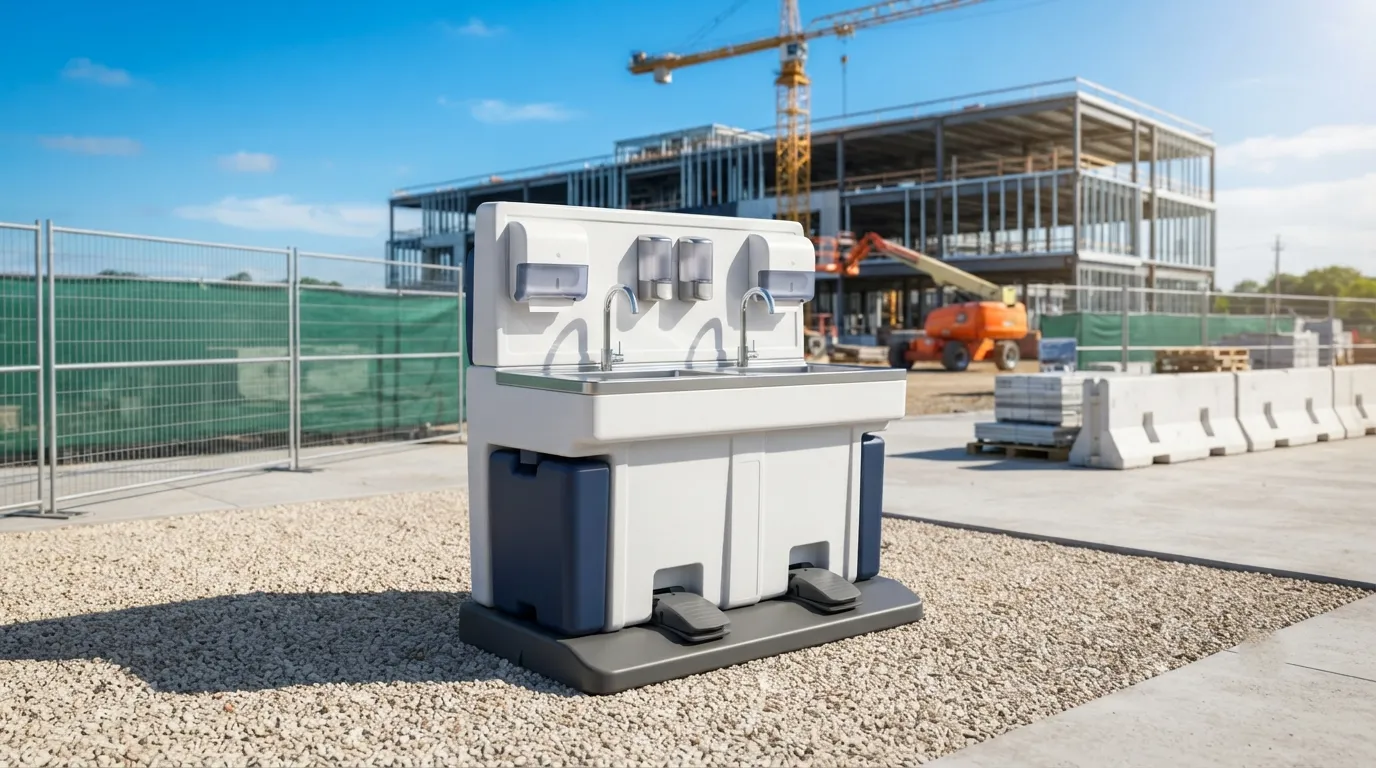
Delivery fees run separately, typically 100 to 500 dollars for a single day drop, and service fees for extra pump-outs during a long fair run 30 to 220 dollars a week depending on how often crews need to return. Our porta potty rental cost page breaks pricing down further, and the restroom trailer rental cost page covers trailer-specific line items like generator hookup. If your fair runs a single weekend, ask about a flat weekend rate instead of day pricing, since it usually works out better for two- and three-day runs. Handwashing matters here too: 29 CFR 1910.141(d)(2) requires soap and towels or a hand dryer at wash stations, not sanitizer alone, so we pair handwashing station rental units with food vendor rows as a standard part of fair packages, separate from the toilet count.
Why do fairs need more service visits than a construction site?
Fair traffic concentrates in short bursts, unlike a job site with a steady crew all day. A grandstand emptying out after a show can put 500 people through six units in twenty minutes, which drains tank capacity fast even on a 60 to 70 gallon standard unit. ANSI/PSAI Z4.3 sets a baseline service interval of once a week for up to 10 users over a 40 hour week, but that math doesn't hold for a fairground pulling thousands through a gate in a single afternoon. We schedule extra service passes during multi-day fairs, timing pump-outs around slow windows like early morning before gates open. For grease and food vendor rows, a grease trap pumping schedule keeps interceptors from backing up, since grease traps get pumped once fats, oils and solids reach 25 percent of liquid depth. Fairgrounds near Moreno Valley draw crowds from across the Inland Empire, including visitors making the 7.4 mile drive from March ARB or the longer 20.8 mile trip from Beaumont, so a fair here often pulls harder on restroom capacity than a local sports event would. We also stage temporary fence rental around restroom clusters when crowd flow needs directing, and light tower rental units keep evening fair restrooms visible and safe once the sun goes down.
How far in advance should I book restrooms for a county fair?
Book 60 to 90 days out if the fair runs a weekend or longer, since trailer availability tightens fast during peak fair season. Standard units have more flex closer to the date, but ADA units and trailers sell out first. Submit a request a quote early to lock a delivery window.
Can I mix standard units and a restroom trailer at the same fair?
Yes, and most multi-day fairs do exactly that. Standard units cover high-traffic zones like the midway, while a trailer serves VIP tents or a grandstand where guests expect sinks and mirrors. We size the mix during the site walk.
Do fairground restrooms need to be ADA accessible?
Yes. ADA Standards section 213.2 requires at least 5 percent of any clustered restroom group be accessible, with a minimum of one unit regardless of total count. Our ADA restroom requirements page covers clearance and door width specs in detail.
What happens if a fair extends past the original schedule?
Call us and we will extend service and add pump-out visits as needed. Most fair contracts build in a buffer day, but weather delays or extended runs happen. We keep trucks routed nearby during fair weekends specifically for this.
Are handwashing stations required near food vendors at a fair?
Yes, food vendor rows need working handwash access under 29 CFR 1910.141(d)(2), which calls for soap and towels or a dryer, not sanitizer alone. We place portable sink rental units at vendor intervals as part of standard fair packages.
Next step
Get a delivery date
Tell us the address, the dates and the headcount. We size the order and confirm the route.