How fast can you deploy after a disaster hits Moreno Valley?
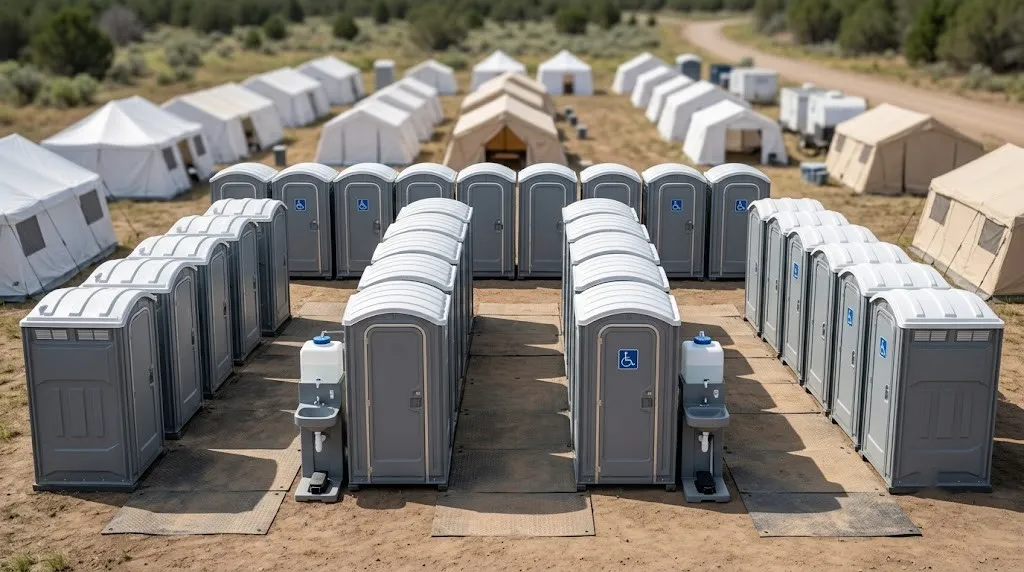
Emergencies do not wait for a normal delivery window, and neither do we. Moreno Valley Porta Pros keeps emergency porta potty rental capacity ready for the exact moment a shelter, command post or displaced neighborhood needs toilets fast. A standard unit needs no power and no hookup, just flat ground, which is why it is the backbone of any disaster relief sanitation response. Each standard porta potty rental holds a 60 to 70 gallon tank and stands about 92 inches tall on a footprint near 44 by 48 inches, small enough to fit beside a Red Cross tent or a relief distribution line without blocking foot traffic. Response teams working county-wide often stage from Moreno Valley because March ARB sits 7.4 miles southwest, giving quick reach into that corridor when a base or nearby facility needs backup sanitation. We also run restroom trailer rental options when a shelter needs something closer to a real bathroom, and holding tank rental when wastewater has nowhere else to go. If a septic system fails under floodwater, our emergency septic service crews pump it out before it backs up into a shelter or a home. Every deployment gets tracked so relief coordinators know exactly how many units are on the ground and where.
What do relief sites in Moreno Valley actually need on the ground?
Shelters and staging areas need toilets sized to headcount, not guesswork. OSHA 1926.51(c) sets a baseline of one toilet for every 20 workers on a jobsite, and disaster response teams use that same math to figure out how many units a shelter or command post needs once volunteers and displaced residents are counted together. Our how many porta potties do i need guide walks through that count so a shelter manager in Moreno Valley is not guessing under pressure. ADA Standards section 213.2 requires that where single-user units are clustered, at least 5 percent be accessible, never fewer than one, so any relief site with multiple units needs at least one ADA accessible porta potty in the mix. Clean water matters too. OSHA 1926.51(a)(1) requires an adequate supply of potable water at any place of employment, which is why we pair toilets with handwashing station rental units and, where soap and towels are required under 29 CFR 1910.141(d)(2), a proper portable sink rental instead of sanitizer alone. For sites still running on generators, we can also place light towers and coordinate a temporary power pole if the relief operation needs power on-site. If debris removal is part of the recovery, a roll-off dumpster rental clears storm wreckage faster than hauling it by hand.
Do you handle both short bursts and extended recovery periods?
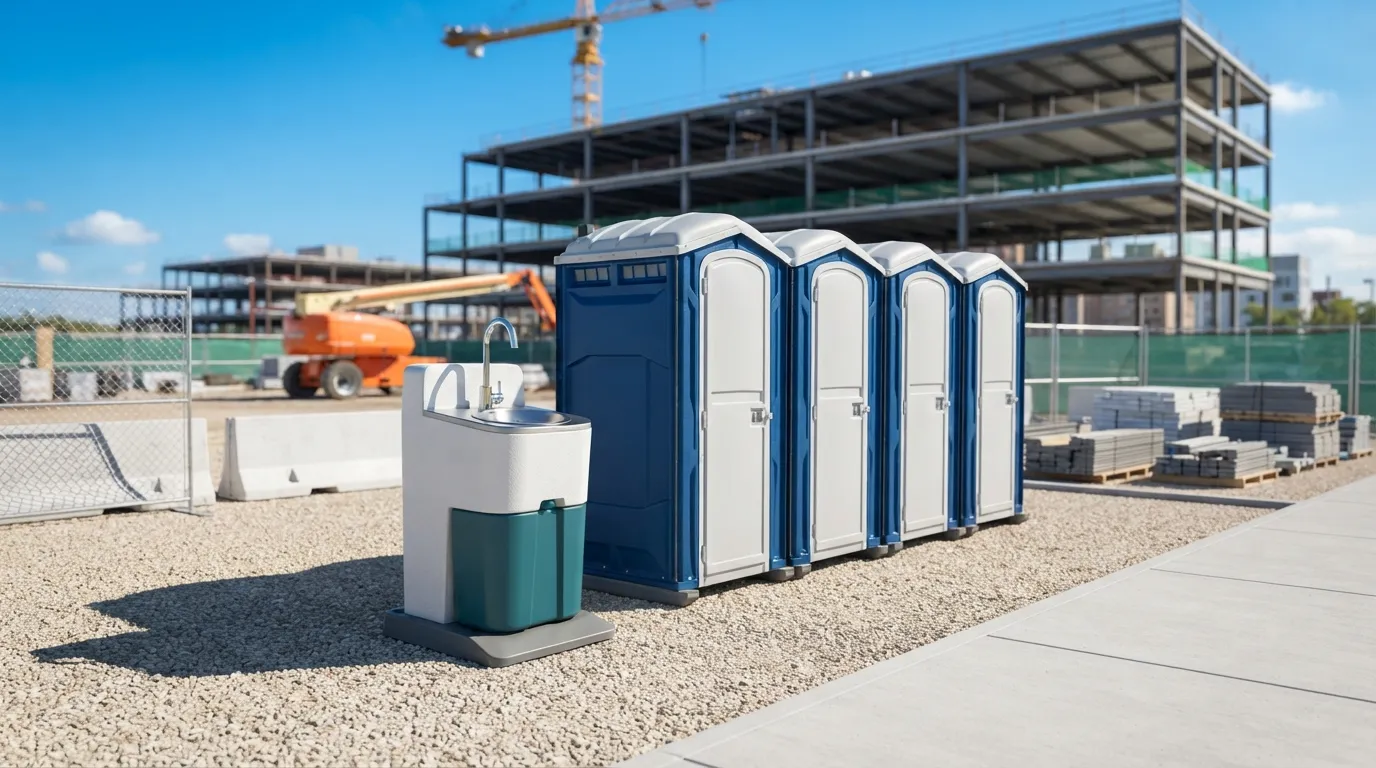
Disasters do not run on a fixed schedule, so we do not either. Some relief sites need units for three days while power comes back on; others need coverage for months while a neighborhood rebuilds. Pricing scales with duration: a standard unit runs 125 to 325 dollars for a full month versus 100 to 350 dollars per day, so extended recovery work costs less per day the longer it runs. See the monthly porta potty rental and porta potty rental cost pages for the full breakdown, or check porta potty rental per day if you are still in the acute phase. For a relief site running weeks, not days, a storage container rental can hold donated supplies, water, and cleaning gear on-site so volunteers are not driving back and forth. If the recovery site sits on farmland or open ground, our farm and agricultural restrooms setup handles rougher terrain. Loma Linda sits 15.4 miles north and Colton 16.5 miles northwest, both close enough that a single Moreno Valley Porta Pros crew can rotate service between multiple relief points without losing a service day. Jurupa Valley, 19.0 miles west, falls into that same service radius when a regional disaster spans several cities at once.
| unit | duration | low | typical | high |
|---|---|---|---|---|
| standard | day | 100 | 150 | 350 |
| standard | week | 130 | 200 | 500 |
| standard | month | 125 | 200 | 325 |
| ada | day | 200 | 230 | 400 |
How quickly can a unit reach a shelter after the initial call?
We prioritize emergency requests ahead of standard bookings and move units the same day whenever the road into the site is clear. Delivery fees run 100 to 500 dollars a day depending on distance and access. Call Moreno Valley Porta Pros directly for the fastest routing.
Do disaster relief sites need ADA-accessible units?
Yes. ADA Standards section 213.2 requires at least 5 percent of clustered single-user units be accessible, never fewer than one, and section 405.2 caps any ramp at a 1:12 slope. Our ADA restroom requirements guide covers full placement rules.
Can you supply handwashing stations alongside toilets?
Yes. OSHA 1926.51(a)(1) requires potable water at any worksite, and relief shelters follow the same principle. We pair units with hand sanitizer station rental or a full sink setup depending on what the site needs.
What happens if floodwater damages a septic system nearby?
Our septic pumping service crews respond directly, pumping tanks before overflow reaches a shelter or home. A typical residential tank is pumped every 3 to 5 years normally, but flood conditions call for immediate emergency pumping instead.
Do you serve areas outside Moreno Valley during regional disasters?
Yes, within our normal service radius. Beaumont sits 20.8 miles east and San Jacinto 20.9 miles southeast, both reachable for multi-site regional response. Check service areas for the full list of nearby cities we cover.
Next step
Get a delivery date
Tell us the address, the dates and the headcount. We size the order and confirm the route.